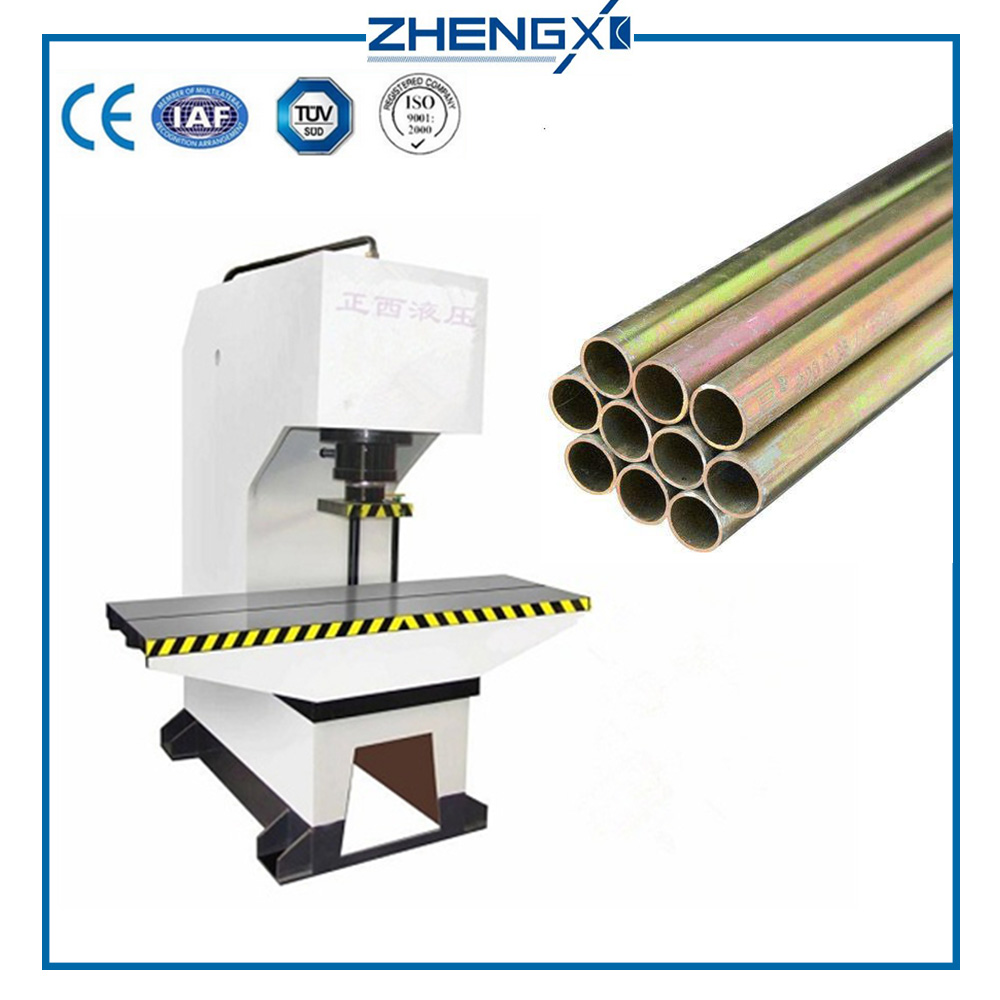
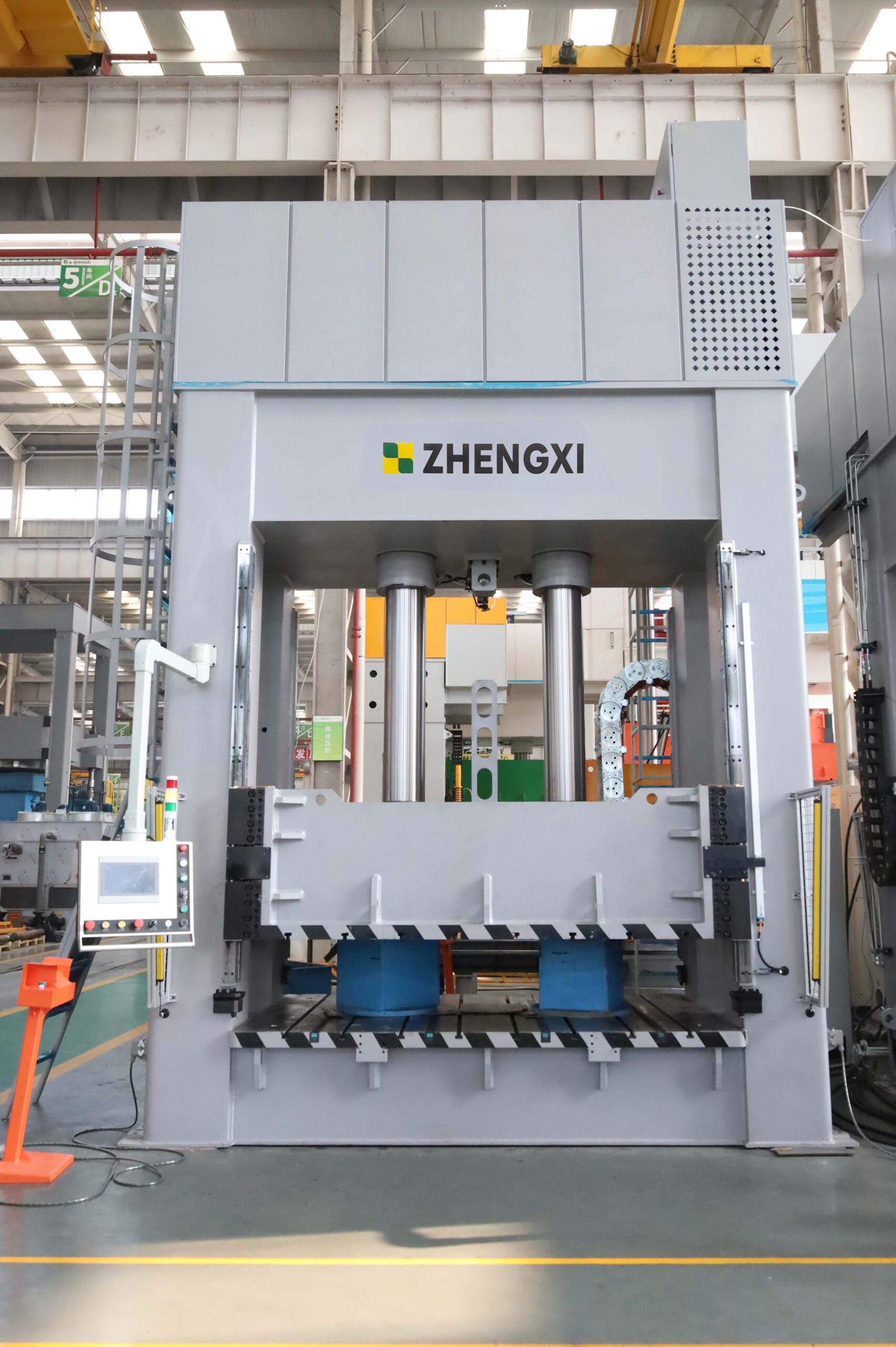
Hydraulic press machines are powerful industrial tools that operate based on Pascal’s Principle, enabling significant force multiplication through hydraulic fluid transmission. These machines have key parts like hydraulic cylinders, pistons, pumps, and control systems. They come in different types, such as four-post hydraulic presses and custom designs.
How Does Hydraulic Pressure Work According to Pascal’s Principle?
The Foundation of Force Multiplication
Pascal’s Law says that when you apply pressure to a confined fluid, it spreads out evenly in all directions. This fundamental principle forms the basis for how hydraulic press machines work.
When a small force is applied to a small piston, it creates pressure. This pressure moves to a larger piston. This leads to a big increase in force.
Pressure Transmission Mechanism
The formula for how a hydraulic press works is P = F/A. In this formula, pressure is force divided by area. Since the system maintains the same pressure, you can find the output force using the formula F2 = F1 × (A2/A1). If the larger piston is 100 times bigger than the smaller one, the output force will be 100 times greater than the input force.
Components and Function of Hydraulic Press Machines
Essential Hydraulic Press Components
A typical hydraulic press machine consists of several critical components:
- Hydraulic Cylinder: The core component that generates compressive force
- Piston: Movable component that applies pressure to workpieces
- Hydraulic Pump: Supplies hydraulic fluid to create system pressure
- Control Valves: Regulate fluid flow and pressure distribution
- Frame Structure: Provides structural support and stability
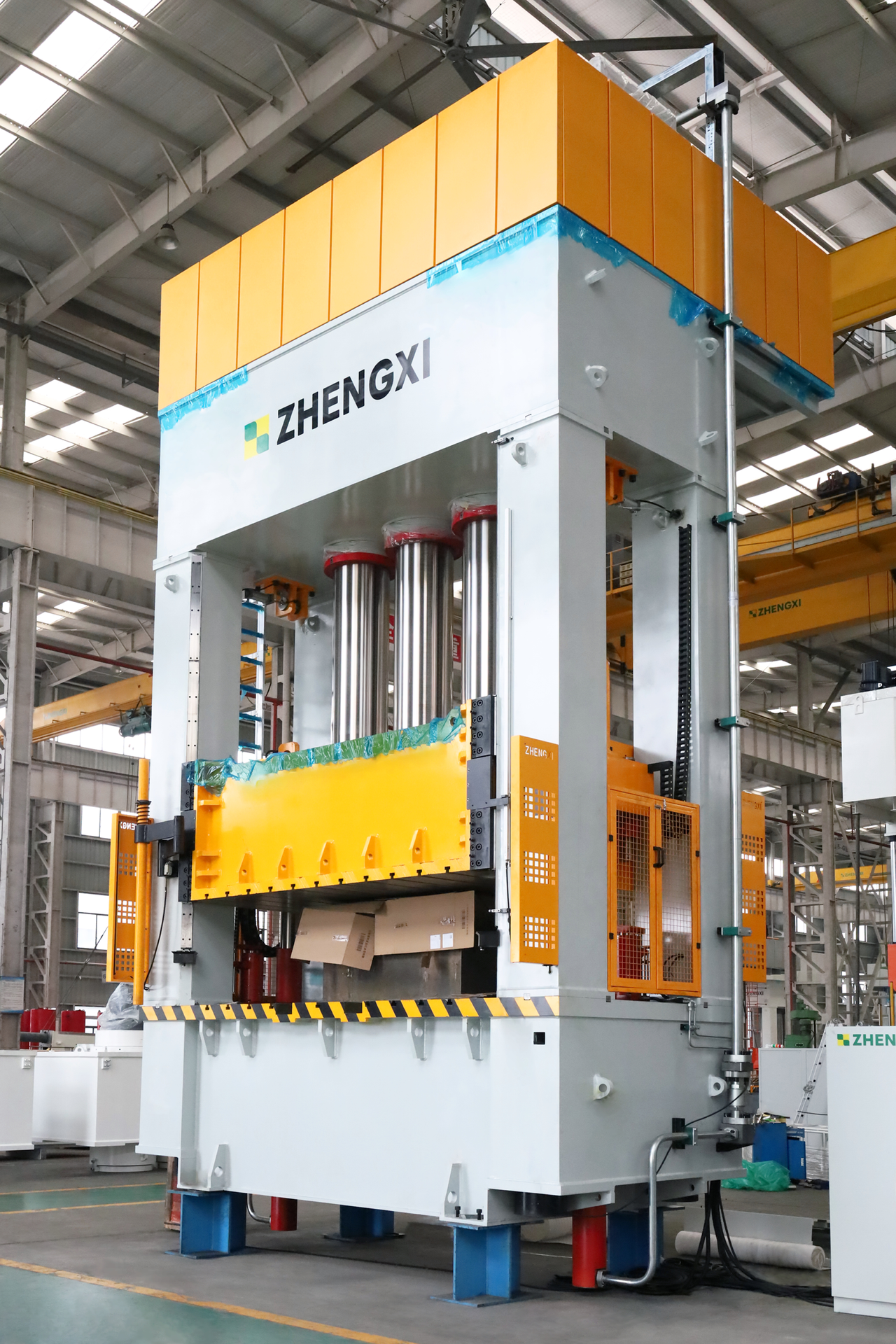
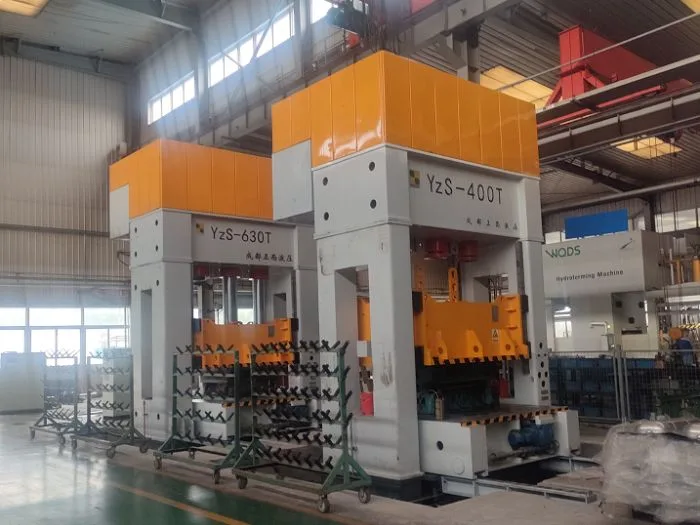
ZHENGXI Composite Material Molding Machine
Composite Material Molding Hydraulic Presses have vertical guide platens. These platens are powered by hydraulic cylinders.
They use bronze bushings that slide on four hard chrome-plated steel posts. This design provides great stability and accuracy for heavy-duty tasks. It is perfect for metal forming and stamping work.
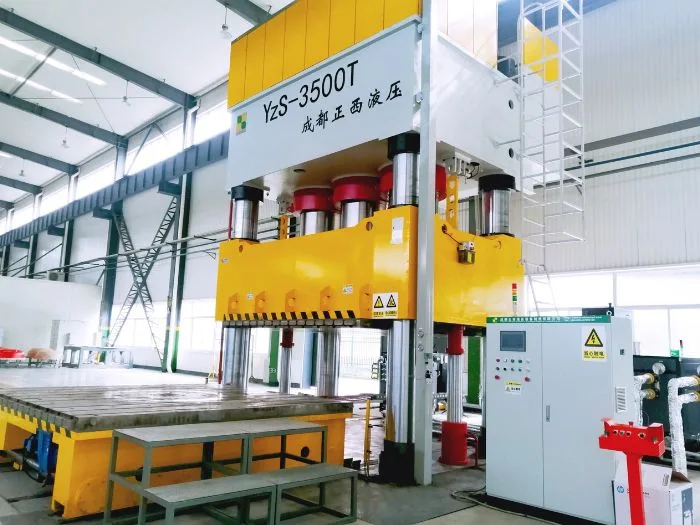
Industrial Applications and Custom Hydraulic Press Solutions
Versatile Industrial Applications
Hydraulic press machines find applications across numerous industries:
- Automotive: Forming chassis components, body panels, and transmission parts
- Aerospace: Manufacturing critical components requiring high precision
- Construction: Producing structural beams and concrete products
- Plastic Industry: Compression molding and injection molding processes
- Metal Fabrication: Stamping, bending, and deep drawing operations
Custom Hydraulic Press Advantages
Custom hydraulic press solutions offer tailored performance for specific industrial requirements. These special machines can be made with different tonnage capacities, stroke lengths, and control systems. This helps improve production efficiency and meet specific manufacturing needs.
Conclusions
In conclusion, the versatility and adaptability of hydraulic presses make them indispensable in various industrial sectors. By customizing these machines, manufacturers can improve their efficiency. This helps them meet the specific needs of their production processes.
Also, the ability to change tonnage and stroke lengths gives more flexibility. This is important for handling different materials and shapes, especially in industries where precision matters. In the automotive sector, making complex shapes with high accuracy can cut waste and improve the final product’s quality.
Also, using advanced control systems in custom hydraulic presses lets operators watch and change settings in real-time. This improves precision and lowers the chance of mistakes. This technological advancement not only streamlines production but also contributes to safer working environments by minimizing the risk of accidents associated with manual adjustments.
As industries continue to evolve, the demand for efficient and reliable hydraulic press solutions will only grow. Investing in custom hydraulic presses can give businesses a competitive edge. This helps them adapt to market changes and keep high quality and efficiency.