Summary:
Choosing the right hydraulic press structure is the first and most important step in any custom press project. C-frame, H-frame, and four-column hydraulic presses each serve different needs. This article provides a complete hydraulic press structure comparison to help you decide which type best fits your space optimization goals and automation integration requirements. Whether you run a compact workshop or a large automated production line, this guide will help you make the right choice.
Why Hydraulic Press Structure Matters in Custom Projects
Structure Defines Performance, Space, and Cost
When you order a custom hydraulic press, the frame structure is not just about appearance. It directly affects force distribution, rigidity, workspace access, floor space usage, and automation compatibility. Each type of hydraulic press has its own strengths. When selecting a machine, consider your specific process, workpiece size, precision requirements, and budget.
A wrong structure choice can lead to wasted factory space, difficult automation retrofits, and poor production efficiency. That is why understanding the hydraulic press structure comparison is essential before placing your order.
Three Key Factors: Tonnage, Space, and Feeding Method
Before comparing frame types, define your three key requirements:
- Tonnage — How much pressing force do you need?
- Space — What is the available floor area and ceiling height?
- Feeding method — Will you use manual loading, robotic arms, or conveyor systems?
These three factors will narrow your options quickly and guide your final decision.
C-Frame Hydraulic Press — Best for Space Optimization in Compact Workshops
What Is a C-Frame Hydraulic Press?
The C-frame hydraulic press is named after its characteristic C-shaped frame, defining its structural configuration. This type of hydraulic press is renowned for its open-front design, which enhances accessibility during material processing.
Key Advantages of C-Frame Design
- Three-sided access: C-frame presses, also known as open frame or gap frame presses, are space-efficient machines with three-sided access. This allows operators to load and unload materials from the front, left, and right sides.
- Space optimization: The compact C-frame design optimizes the workspace, making it suitable for facilities with limited floor space.
- Easy material changes: This design is particularly advantageous for tasks requiring frequent material changes.
Limitations to Consider
- Lower tonnage capacity: C-frame presses may have limitations in terms of tonnage compared to H-frame counterparts, making them less suitable for heavy-duty applications.
- Rigidity concerns: In some instances, the C-frame design may have rigidity limitations, affecting performance when extreme force or high tonnage is required. Under high loads, the open frame can “yawn” or deflect.
Best Use Cases for C-Frame Hydraulic Presses
C-frame presses are ideal for:
- Small to medium workshops with limited floor space
- Light-duty operations such as punching, straightening, and assembly
- Applications where operators need quick access from multiple sides
- Single-station manual or semi-automatic production
A C-frame press fits smaller workshops. If your factory has tight space constraints and you do not need extreme tonnage, this structure delivers the best space optimization.
H-Frame Hydraulic Press — Best for Heavy-Duty Automation Integration
What Is an H-Frame Hydraulic Press?
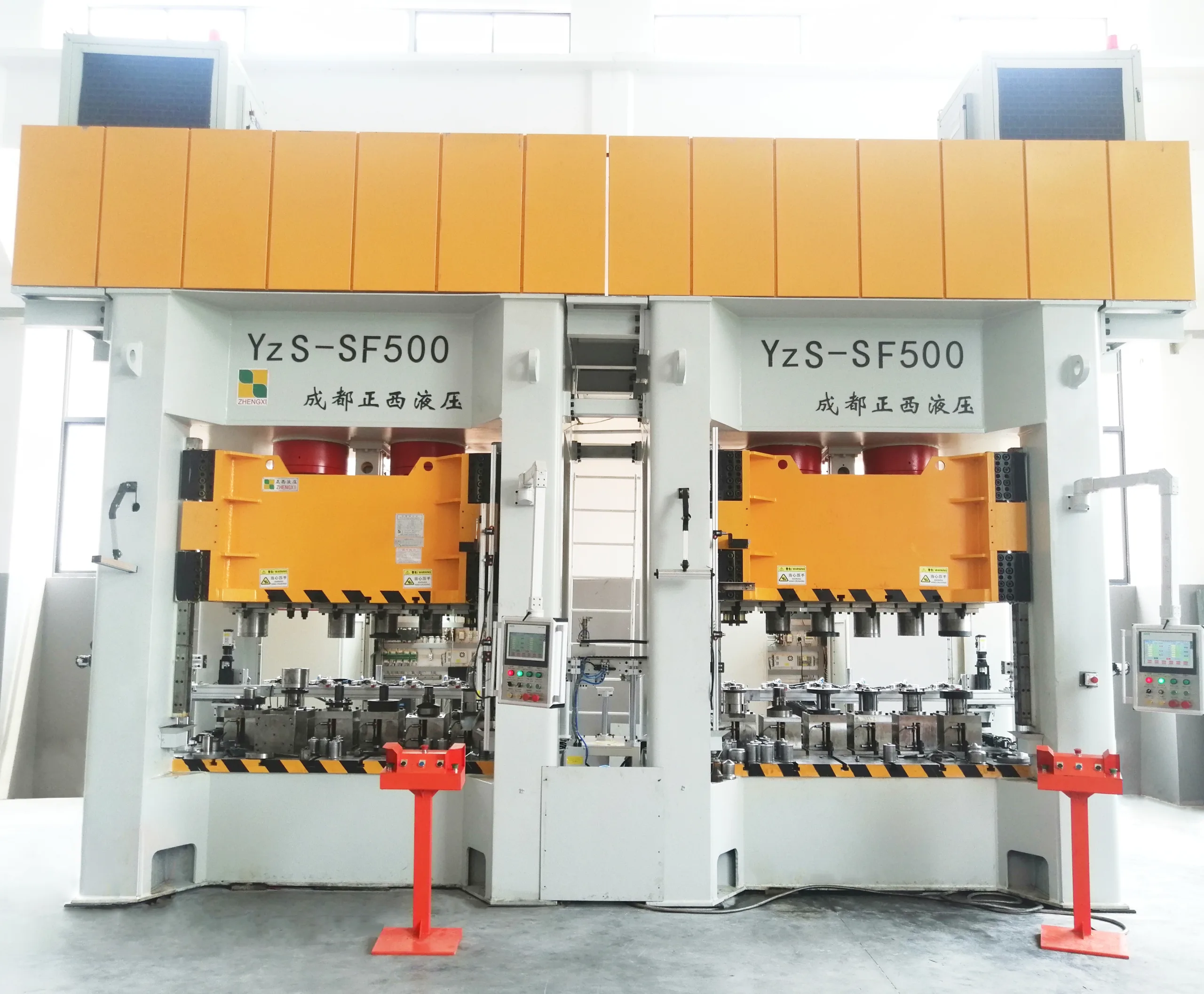
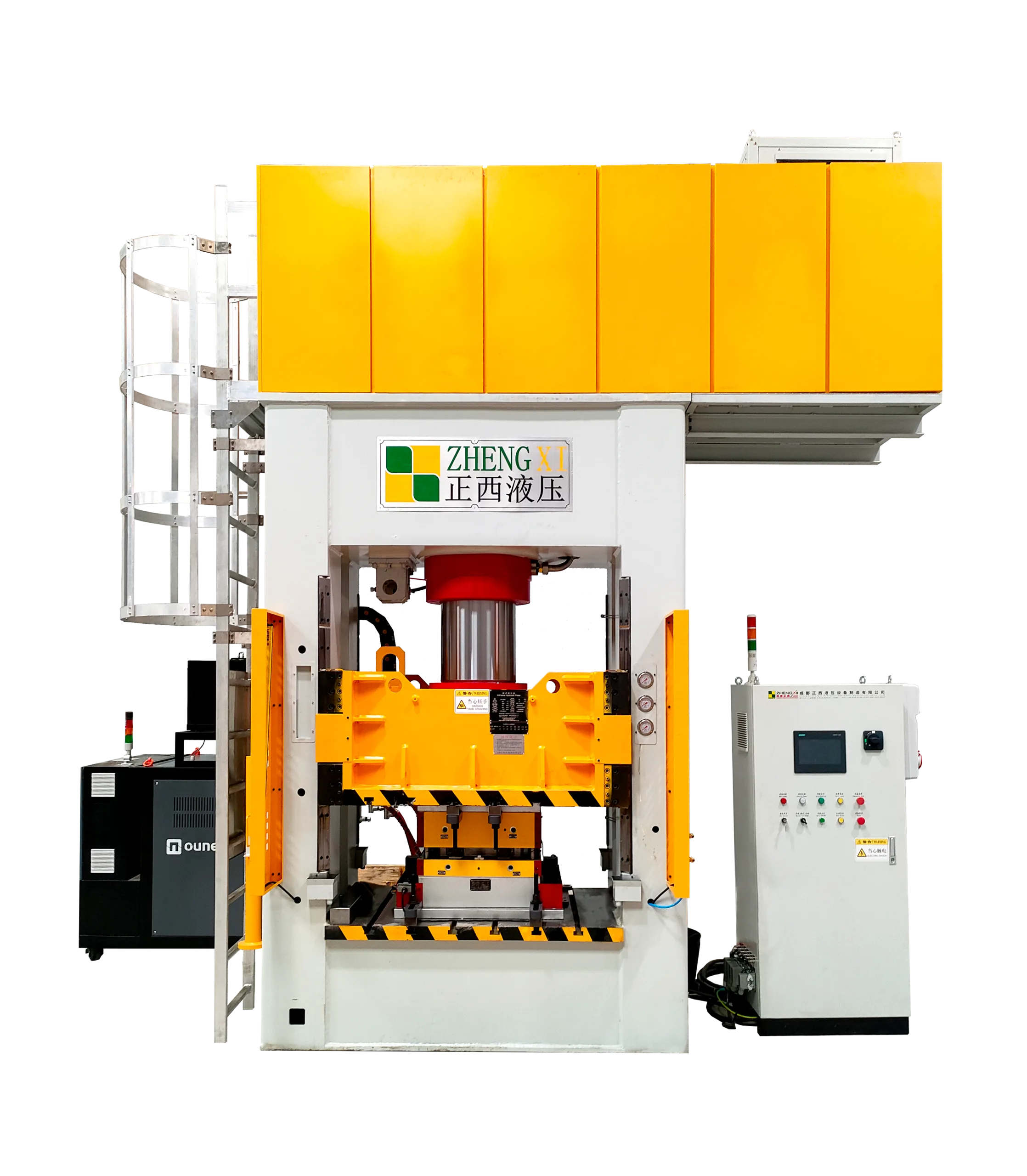
The H-frame hydraulic press, also known as a straight-side hydraulic press, is typically composed of a rectangular frame and a horizontal crossbeam, giving it the appearance of the uppercase letter “H”. Its “H” frame provides stability and support from all four sides of the workspace, making it a widely used type of hydraulic press.
Key Advantages of H-Frame Design
- Superior rigidity: Gib-guided hydraulic presses often adopt this structural design; it is one of the most stable and precise hydraulic press structures.
- Higher tonnage capacity: It has a short stroke length and higher tonnage capacity. If your job requires over 100 tons, H-frame is typically the better choice.
- Excellent for automation: H-frames integrate well into automated lines. The symmetrical structure makes it easy to mount robotic arms, conveyors, and safety light curtains.
- Even pressure distribution: Unlike some C-frame presses, when using a high tonnage, the pressure is evenly distributed and the machine will not “yawn”.
Limitations to Consider
- Requires more floor space, not suitable for space-limited workshops.
- More expensive than C-frame models.
- Reduced operator access from the sides.
Best Use Cases for H-Frame Hydraulic Presses
H-frame presses are ideal for:
- High-tonnage operations such as deep drawing, forging, and stamping
- Automated production lines with robotic loading and unloading
- Applications requiring high precision and minimal frame deflection
- Large workpieces that need stable, even force distribution
If you have enough cost and the press you need is big tonnage, such as more than 1000 tons, then we recommend you to choose an H-frame type press. For automation integration, the H-frame is the preferred choice in most modern factories.
Four-Column Hydraulic Press — Best for Balanced Performance and Versatility
What Is a Four-Column Hydraulic Press?
The four-post hydraulic press refers to a hydraulic press design that incorporates four vertical columns between the upper crossbeam, lower crossbeam, and the ram. These columns provide support and guidance for the ram and bed.
Key Advantages of Four-Column Design
- Even force distribution: It features four upright columns for symmetrical support, ensuring excellent stability and even force distribution.
- Four-sided loading: It offers the flexibility of loading workpieces from four sides. This is a major advantage for automation integration because robotic arms or conveyors can approach from any direction.
- Good parallelism: It is ideal for processes that require large-area pressing or strict parallelism, such as stamping, deep drawing, assembling, molding, and powder pressing.
- Cost-effective: If your budget cost is limited, then you can choose the four-column type. Four-column presses typically cost less than H-frame presses at similar tonnage.
Limitations to Consider
- The four columns can block side access in certain automation setups
- Column wear over time may affect long-term precision compared to gib-guided H-frame designs
- Floor space requirement is moderate — larger than C-frame but similar to H-frame
Best Use Cases for Four-Column Hydraulic Presses
Four-column presses use four vertical columns to guide the moving platen and distribute load evenly. Four-column presses are common in compression molding, rubber processing, and heavy forming operations.
They are also widely used in:
- SMC/BMC composite molding
- Powder metallurgy compacting
- Multi-station automated pressing lines
- Large-area sheet metal forming
Hydraulic Press Structure Comparison — Visual Selection Guide
Side-by-Side Comparison Table
| Feature | C-Frame | H-Frame | Four-Column |
|---|---|---|---|
| Frame Shape | C-shaped, open front | H-shaped, closed sides | Four vertical columns |
| Floor Space | Smallest | Largest | Medium |
| Operator Access | Three sides | Two sides | Four sides |
| Max Tonnage | Low to medium (under 200T typical) | High (100T to 5000T+) | Medium to high (50T to 3000T+) |
| Rigidity | Low to medium | Highest | High |
| Precision | Moderate | Excellent | Good to excellent |
| Automation Integration | Limited | Excellent | Very good |
| Cost | Lowest | Highest | Medium |
| Best For | Space optimization, light duty | Heavy duty, automation | Versatile, balanced |
Quick Decision Guide
- If space is your top concern → Choose C-Frame. It takes up the least floor space and gives operators easy access.
- If automation integration is your priority → Choose H-Frame. Its rigid structure and symmetrical design work best with robotic systems.
- If you need balanced performance at a reasonable cost → Choose Four-Column. It offers good rigidity, four-sided access, and competitive pricing.
- If tonnage exceeds 1000T → H-Frame is almost always the best choice for structural integrity.
- If your process requires large-area pressing with strict parallelism → Four-Column is ideal.
Space Optimization Strategies by Hydraulic Press Structure
C-Frame in Narrow Workshops
For workshops with limited width, a C-frame hydraulic press can be placed against a wall with material feeding from the open front. This saves valuable floor space. The three-sided access also means you do not need extra clearance behind the machine.
H-Frame in Automated Production Cells
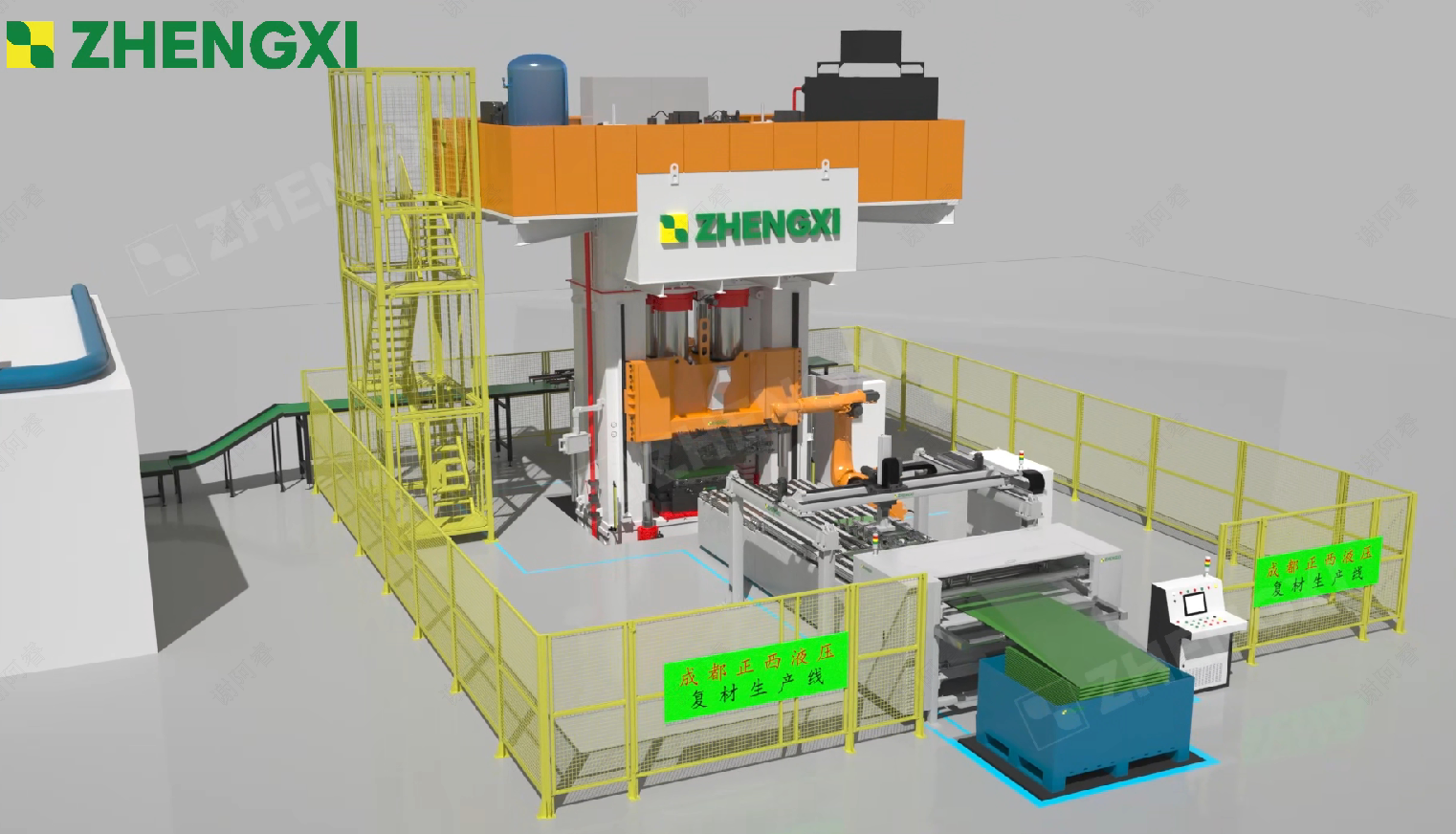
In automated cells, an H-frame hydraulic press is typically placed at the center. Robotic arms are mounted on one or both sides. Robotic arms and manipulators are a popular choice; they not only enhance precision in loading and unloading parts but also allow for complex movement patterns. The closed-frame design offers mounting points for safety guards, light curtains, and sensors.
Four-Column in Multi-Direction Feeding Lines
A four-column hydraulic press can be fed from any of its four sides. This makes it perfect for conveyor-based automated lines where materials enter from one side and finished parts exit from the opposite side. This layout reduces transfer time and saves overall line length.
Automation Integration Tips for Each Hydraulic Press Structure
C-Frame Automation
C-frame presses can be automated for simple tasks like pick-and-place loading, automatic part ejection, and cycle counting. However, the open frame limits the mounting of heavy robotic equipment. Best suited for semi-automatic setups.
H-Frame Automation
Automation technology has revolutionized the way that manufacturers produce precision metal parts, making the process faster, more accurate, and more cost-effective. H-frame presses are the best platform for full automation. They support:
- Robotic loading and unloading
- Automatic die changing systems
- Integrated PLC and HMI control
- Safety light curtains and interlocking guards
- Real-time data monitoring for Industry 4.0
Four-Column Automation
Four-column presses offer excellent automation flexibility. The four-sided access allows multiple robots or conveyors to work simultaneously. They are commonly used in fully automated compression molding lines and multi-station transfer systems.
Modern hydraulic press automation refers to the use of programmable systems, sensors, and robotics to control the operation of the press. Automated presses can be tailored to perform specific tasks with greater speed and consistency.
Conclusion
Selecting the right hydraulic press structure — C-frame, H-frame, or four-column — is not just a technical decision. It is a strategic choice that affects your factory layout, production efficiency, and future scalability. C-frame presses excel at space optimization in compact environments. H-frame presses lead in rigidity and automation integration for heavy-duty applications. Four-column presses offer the best balance of versatility, access, and cost. By carefully evaluating your tonnage needs, available space, and feeding methods, you can choose the hydraulic press structure that maximizes your return on investment. Contact ZHENGXI today for a customized hydraulic press solution that fits your exact production needs.