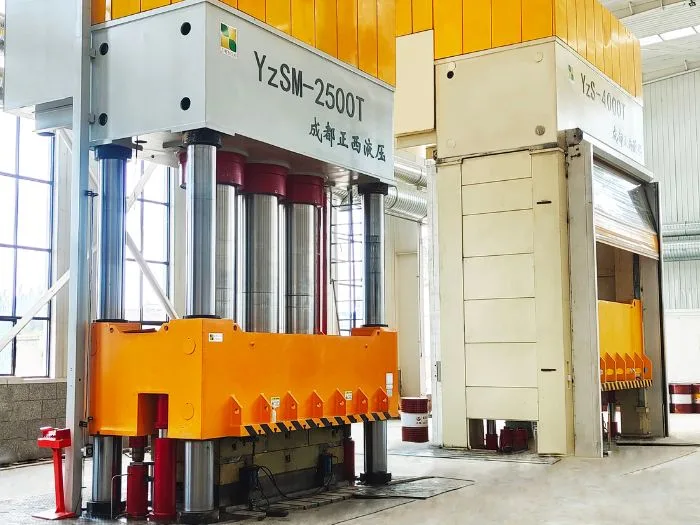
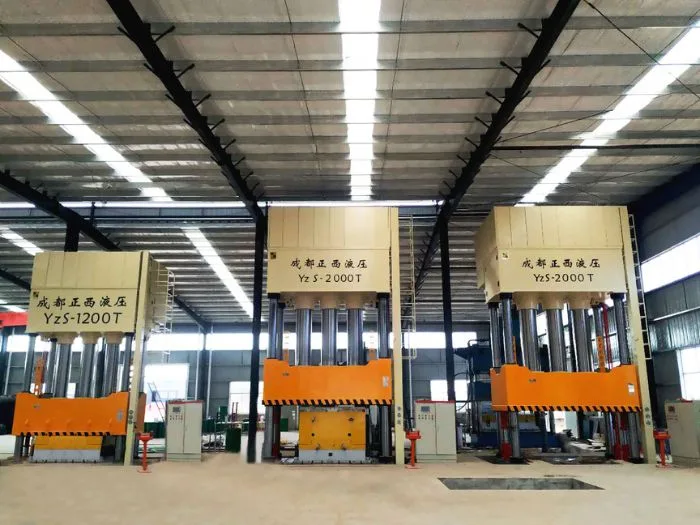
A hydraulic press machine is a powerful mechanical device that uses hydraulic force to compress materials. Unlike mechanical presses that rely on mechanical leverage, hydraulic presses use the principles of fluid mechanics to achieve significant pressure levels, making them suitable for a wide range of industrial applications. This blog will delve into the definition, working theory, and various applications of hydraulic press machines.
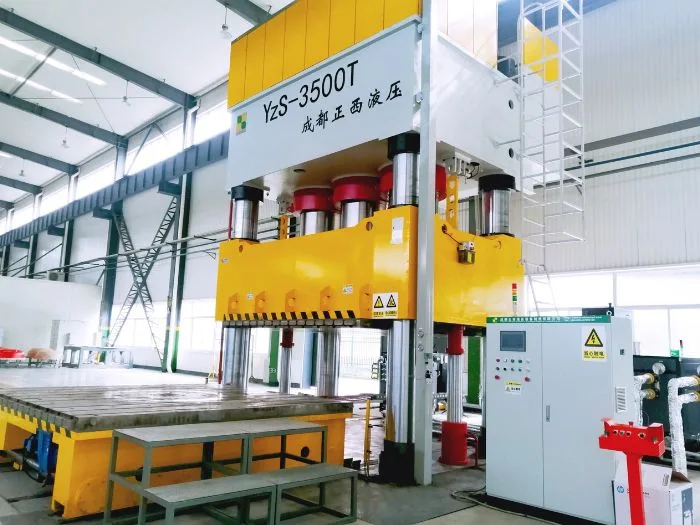
Definition of a Hydraulic Press Machine
A hydraulic press machine is a device that generates a compressive force through the application of hydraulic pressure. It consists of a cylinder, a piston, and a hydraulic fluid, usually oil, that works together to apply force to a material or workpiece. The hydraulic press machine can vary in size and power, from small machines used for laboratory purposes to large industrial presses capable of applying thousands of tons of force.
The machine operates based on Pascal’s law, which states that when a confined fluid is subjected to external pressure, the pressure is transmitted uniformly throughout the fluid. This principle allows hydraulic presses to multiply force and achieve the necessary pressure to shape, compress, or mold materials.
Theory Behind Hydraulic Press Machines
The operation of a hydraulic press machine revolves around the principles of hydraulics, a branch of physics and engineering that deals with the mechanical properties of liquids. The fundamental theory is based on Pascal’s law, named after the French mathematician and physicist Blaise Pascal, who discovered the law in the 17th century.
Pascal’s Law Explained
Pascal’s law states: “A pressure change in an incompressible fluid is transmitted undiminished throughout the fluid in all directions.” This means that when pressure is applied to a confined liquid, it is distributed evenly in all directions, allowing the hydraulic system to exert a large force over a small area.
In a hydraulic press, a small force applied to a small-area piston (called the master cylinder) generates a much larger force on a larger-area piston (the slave cylinder). The relationship between the force (F), pressure (P), and area (A) is given by the equation:
F=P×A
Where:
F is the force applied by the hydraulic press.
P is the pressure within the hydraulic fluid.
A is the cross-sectional area of the piston.
Given this relationship, a small input force can generate a large output force by simply increasing the area of the piston in the slave cylinder. This principle makes hydraulic presses highly efficient and capable of performing heavy-duty tasks that would be impossible with mechanical systems alone.
Components of a Hydraulic Press
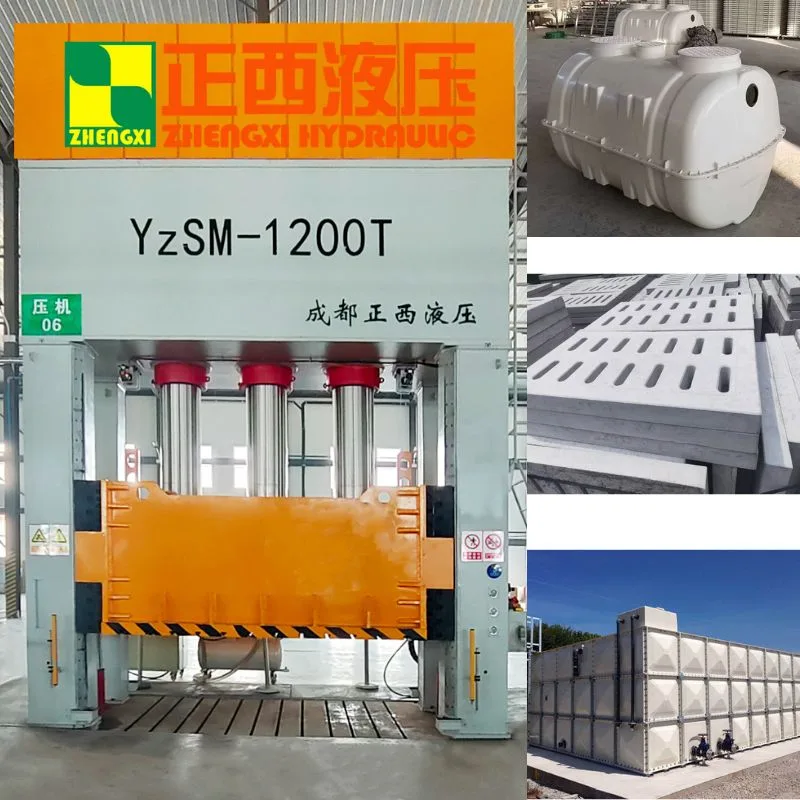
A typical hydraulic press machine consists of several key components:
- Hydraulic Cylinder: The core component that generates force. It contains the piston and hydraulic fluid.
- Piston: A movable component inside the cylinder that applies pressure to the workpiece.
- Hydraulic Pump: The pump that supplies the hydraulic fluid to the system, creating pressure.
- Hydraulic Fluid: Typically oil, this fluid transfers the force from one part of the system to another.
- Valves: Control the flow of hydraulic fluid, regulate pressure, and ensure safe operation.
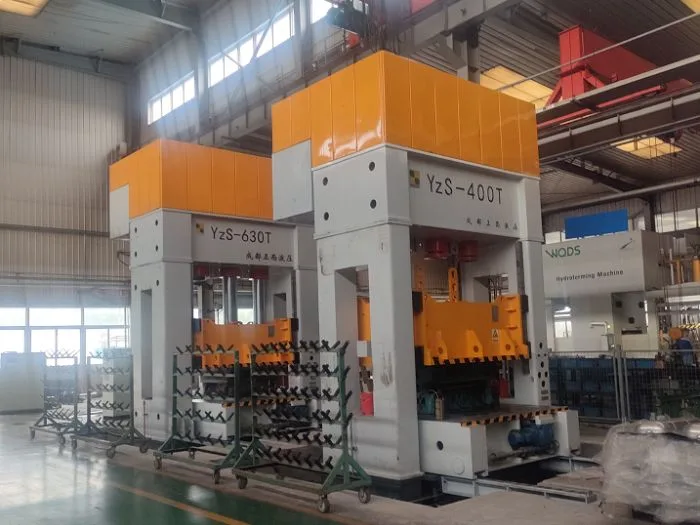
- Frame: The structural framework that supports the cylinder and workpiece.
Applications of Hydraulic Press Machines
Hydraulic press machines are crucial in various industries for shaping, molding, and assembling materials with precision and force.
In the automotive industry, these machines form chassis, engine parts, and body panels, ensuring vehicles are strong and accurate in their construction. The aerospace industry uses hydraulic presses to manufacture critical components like fuselage panels and composite materials, where precision and durability are paramount.
In metal fabrication, hydraulic presses perform essential tasks such as sheet metal forming, punching, and tube bending, enabling the production of structural components. The construction industry relies on these machines to produce concrete blocks, steel beams, and heavy machinery parts, ensuring building materials are robust and reliable.
The plastic and rubber industry uses hydraulic presses for injection molding and rubber vulcanization, key processes for making everything from automotive parts to packaging materials. These examples highlight how hydraulic press machines are indispensable in modern manufacturing, offering the force and accuracy needed across diverse sectors.
Advantages of Hydraulic Press Machines
Hydraulic press machines offer several advantages over mechanical presses, including:
- High Force Output: They can generate significantly higher forces, making them suitable for heavy-duty applications.
- Precision and Control: The force applied can be controlled with great accuracy, ensuring precise operation.
- Versatility: They can be used in a wide range of applications, from metal forming to material testing.
- Safety: Modern hydraulic presses come with safety features that prevent accidents, such as overload protection and emergency stop mechanisms.
- Cost-Efficiency: They are often more cost-effective for heavy-duty tasks compared to mechanical alternatives.
Conclusion
Hydraulic press machines are indispensable tools in modern industry, offering unmatched force, precision, and versatility. Their applications range from metal forming and plastic molding to material testing and recycling, making them essential in manufacturing processes worldwide. Understanding the principles behind their operation and the wide array of uses highlights the importance of hydraulic presses in both current and future industrial applications.